Stu Robinson
East of the MountainsStu Robinson is a truck driver whose spontaneous offer helps Ben Givens get the injured Rex to veterinary care. Appearing in a brief roadside episode, Robinson turns his truck into shelter and transport, then gives Ben time to wait for treatment. His kindness is practical rather than grand: he offers what he has, stays when there is no obligation to do so, and leaves the next choice to Ben.
Introduction and Appearance
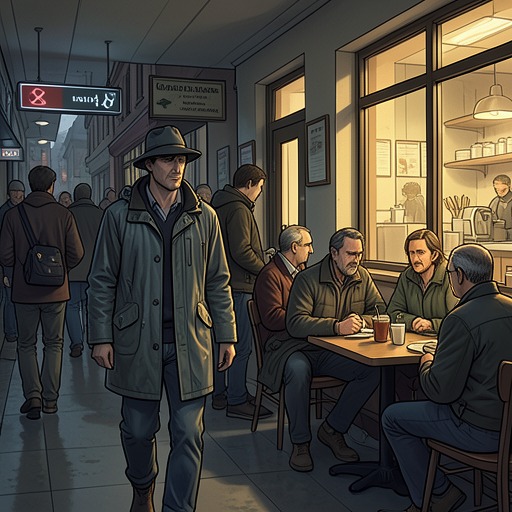
When Ben enters a restaurant seeking someone to drive Rex to a veterinarian, Robinson is the man who rises to help. Tall, thin, and hollow-eyed, with pointed black sideburns, he wipes his lips with a napkin and drops it on the table as he stands. His first exchange with Ben is direct: he agrees to go, then asks about Ben’s injured eye. Ben explains that he was in a car wreck at Snoqualmie Pass.
Robinson’s appearance is described with particular emphasis on his severely inflamed, acne-scarred face, marked by vivid red, blue, and purple eruptions. The detail gives his presence a stark physical specificity, but his actions are not defined by his appearance. He kneels beside Rex, considers how the dog can travel comfortably, and takes responsibility for getting him to care. He wears cowboy boots and a tight red windbreaker bearing the name of an Arizona saloon across the back.
Life on the Road
Robinson drives a refrigerated Freightliner that he has named the Sweet Dreams Express. Its blue paint is fresh, its racing stripes conspicuous, and the truck is otherwise immaculate. The refrigeration compressors rattle as they run; Robinson explains that he is hauling twenty-pound sacks of restaurant salad to Calgary. The load and the truck’s sleeper cabin establish the particular conditions of his working life: his vehicle is both a commercial rig and, as he tells Ben, his home.
The sleeper is arranged like a compact motel room, with a neatly made bed, refrigerator, closet, and television. Robinson says he lives there just about all year round. The truck is clean and tightly organized, though its windshield is pitted with bug marks. Ben, unfamiliar with such a space, remarks on it; Robinson’s matter-of-fact answer makes clear that this is not a novelty or temporary convenience to him but the place where he lives.
His route is flexible. He has come north from The Dalles on Highway 97, then headed east at Ellensburg to avoid Swauk Pass. He could reach Highway 97 at Wenatchee, take Highway 28 toward Soap Lake and then Highway 17 toward Brewster, stop in Wenatchee or Ephrata, or continue north to Omak. Calgary is about five hundred miles away, but he says he can stop wherever he likes. With food and a bed in the truck, waiting an extra twenty or thirty minutes does not disrupt a fixed schedule.
Helping Ben and Rex
Robinson offers to carry Rex in the sleeper, where the dog can ride comfortably, and places Ben’s rucksack inside before lifting the dog, bundled in a blanket, into the truck. Rex does not resist. The sleeper is sterile and close-fitting, but it provides a protected place for him to lie while Robinson drives Ben toward veterinary help.
At the clinic, Robinson does not treat the fare as a reason to hurry away. He drives Ben back there and waits with him in the running truck as darkness deepens. Ben pays the promised sixty dollars. Robinson jokes that it will buy enough diesel to travel five miles, perhaps ten if fuel prices have not risen in the last three minutes. They laugh, drink his thick, heavily sugared coffee, and check on Rex, who is asleep and appears content on the floor. Robinson listens to traffic on the radio and smokes while they wait.
When the veterinarian arrives, Robinson helps lower Rex’s blanket-sling from the sleeper, as if lowering a load by helicopter cable. He looks down at Ben and the dog, wishes them the best, and turns his gaze toward something in the distance. The gesture marks a quiet parting: Robinson has brought them to the point where Rex can receive care, but the next stage belongs to Ben and the veterinarian. Ben’s subsequent willingness to assist during Rex’s treatment follows this act of transport, though Robinson is not shown taking part in the procedure.
Narrative Significance
Robinson’s episode is a small interruption in Ben’s journey with a large practical consequence. Ben arrives needing immediate help for an injured dog; Robinson responds without bargaining over the delay or insisting that the journey fit a schedule. The truck’s sleeper, ordinarily Robinson’s private home, becomes temporary shelter for Rex, and Robinson’s open-ended route makes room for the emergency.
The episode also characterizes generosity through concrete acts rather than declarations. Robinson gets up from his meal, makes space in his truck, drives to the clinic, waits while Rex’s condition is addressed, and helps bring him in. His jokes about diesel and his unhurried coffee offer a moment of ease amid Ben’s urgency, without diminishing the seriousness of the situation. Once Robinson has delivered Ben and Rex to care, he fades from the action; what remains is the effect of his assistance, which allows Ben to continue helping the dog.